A Daily Step Goal Turns Into an Endless Cycle of Anxiety, Food, and Control
A woman tells Dr. Phil she is obsessed with taking 100,000 steps a day. The episode explores anxiety, food restriction, compulsive exercise, family concern, and the danger of turning health goals into a cycle of fear.
Exercise is usually seen as healthy, but what happens when movement stops feeling like a choice and starts feeling like a demand? In this Dr. Phil segment, Liz says, “I am obsessed with taking 100 thousand steps a day.” Her routine begins before sunrise, continues for hours, and leaves little room for rest, relationships, or peace of mind. What first appears to be discipline quickly reveals something deeper: anxiety, food fixation, body fear, and a daily cycle that no longer seems truly healthy.
A Routine That Begins Before Sunrise
Liz describes a schedule that most people would find impossible to maintain. She says, “I set my alarm between 3:30 and 5:00 a.m.” Her goal is not simply to be active. Her goal is to reach an extreme number: 100,000 steps in a single day.
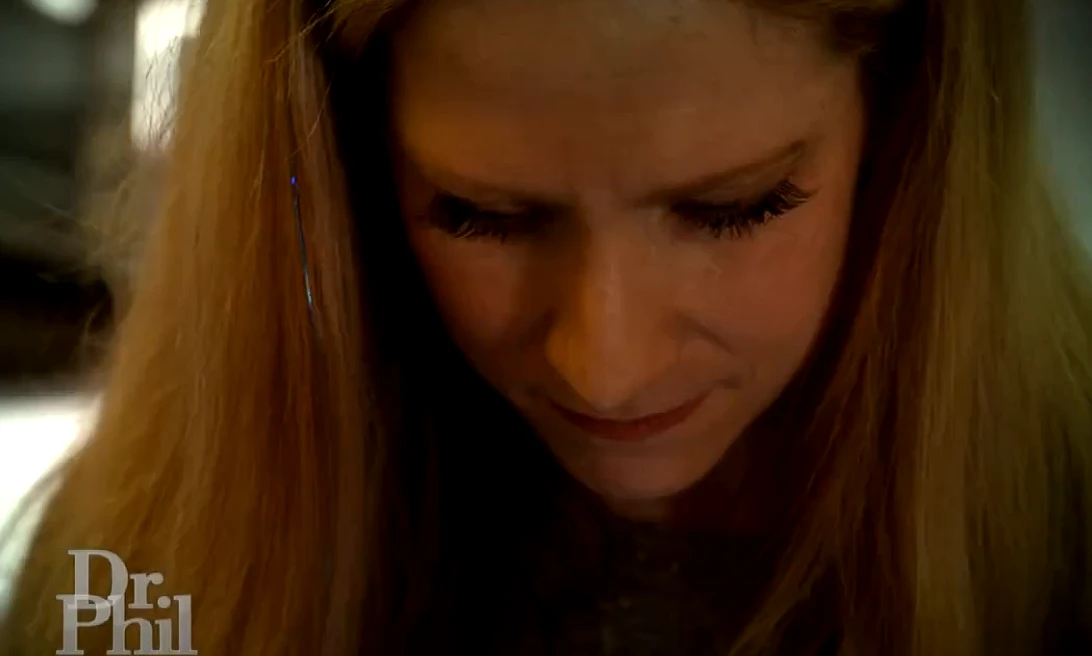
She admits, “I am obsessed with taking 100 thousand steps a day.” That word, “obsessed,” is important. Liz is not describing a hobby, a fitness challenge, or a casual routine. She is describing something that has become mentally demanding and emotionally difficult to stop.
Even when she does not reach the goal, she feels failure. She says, “I kind of let myself down this week. One day I walked 35,000.” For many people, 35,000 steps would be an extraordinary achievement. For Liz, it feels like disappointment.
This is the first warning sign. A healthy goal usually supports a person’s life. In Liz’s case, the goal has started to control her life.
Walking Has Consumed Her Day
Liz’s routine is built around hours of movement. She says, “I usually jog about three and a half hours before I take a break.” After that, she eats, then continues for “another two and a half, three hours,” eats again, and jogs for another three hours.
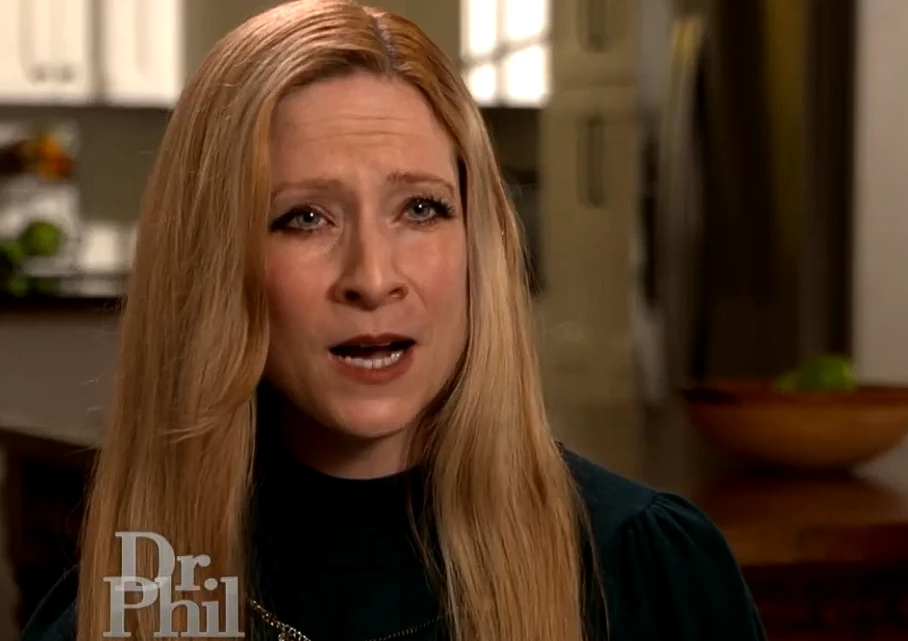
Her day is no longer organized around normal activities. It is organized around steps. Eating, resting, and even bathroom breaks become interruptions to the routine.
One of the most revealing lines comes when Liz says, “I absolutely wish I just had a catheter so I didn’t have to stop jogging.” This statement shows how far the routine has gone. Basic bodily needs have become obstacles in her mind.
Her family also notices the intensity. One person says, “If this cat had pneumonia, she would still jog around the coffee table.” Another recalls seeing her “fall into the coffee table,” hurt her leg, and still continue jogging.
Liz summarizes the situation herself: “Jogging has consumed my life.” That sentence is the heart of the episode. Movement is no longer serving her. She is serving the movement.
The Food Obsession Behind the Step Count
The episode then reveals that the step routine is closely connected to food. Dr. Phil explains that Liz’s extreme routine means she may burn “4 to 5,000 calories a day,” which leads into her second major struggle.
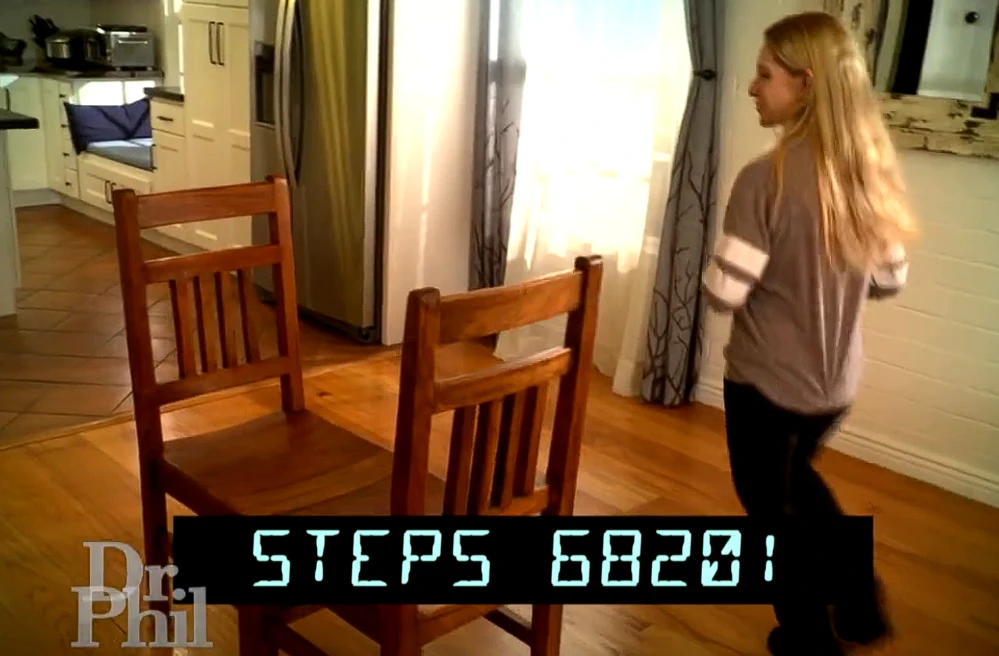
Liz says, “My brain is a tangle of an obsession of eating and food and calories.” She adds, “That’s literally all I think about.”
This statement changes the meaning of the step goal. It is not only about fitness. It is about anxiety around food, calories, and body image. Liz is not simply trying to be active. She is trying to manage fear.
She explains that when she fixes meals, she weighs portions carefully. She says, “I restrict my food during the day,” and describes measuring small amounts such as “1/3 of a cup.” She also says she sticks to “about 1900 to 2100 calories a day” while trying to burn “4 or 5,000.”
The imbalance is concerning because it shows a cycle of control. Food is measured. Calories are counted. Steps are tracked. The entire day becomes a calculation.
Reward, Guilt, and the Endless Cycle
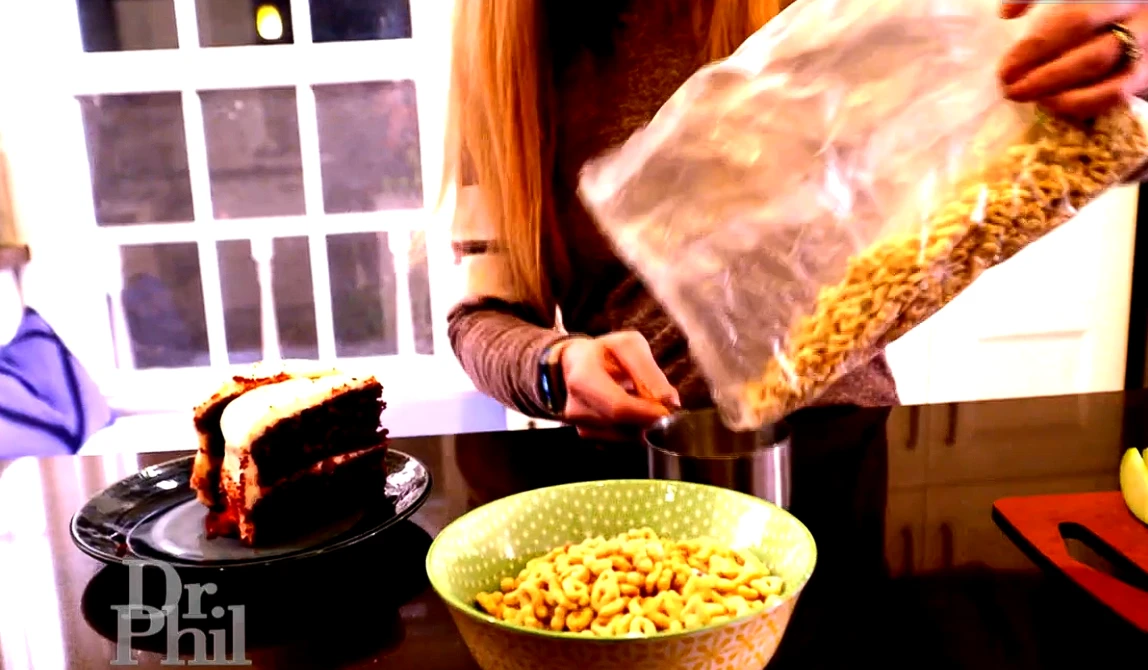
Liz also describes a pattern involving sweets. She says, “The hardest part about restricting my calories is I’m addicted to sweet foods.” She mentions red velvet cake, cereal, pumpkin pie, cinnamon rolls, and other foods she enjoys.
On one level, this may sound like ordinary cravings. But in Liz’s case, the cravings are tied to guilt and compensation. She says, “By the end of the night I would like to reward myself with a slice of red velvet cake.” On a good day, she may have “two slices.” Then she eats cereal, saying that by the time the night is over, she has eaten “four or five cups of Lucky Charms.”

The issue is not simply eating sweets. The issue is what happens afterward. A family member explains that Liz will “take some cake and keep walking.” Liz calls it “an endless cycle.”
That phrase is critical. She restricts, walks, eats, worries, and walks more. The body never gets true peace because every action creates another reason to keep moving.
Anxiety When She Stops
When Liz sits for the interview, even that becomes stressful. She says, “Sitting here in this interview has given me anxiety.” She worries about “how many steps I’m missing” and “how many calories are going straight to my thighs.”
Dr. Phil asks if she is anxious sitting there because she would rather be walking. Liz answers, “Yes.”
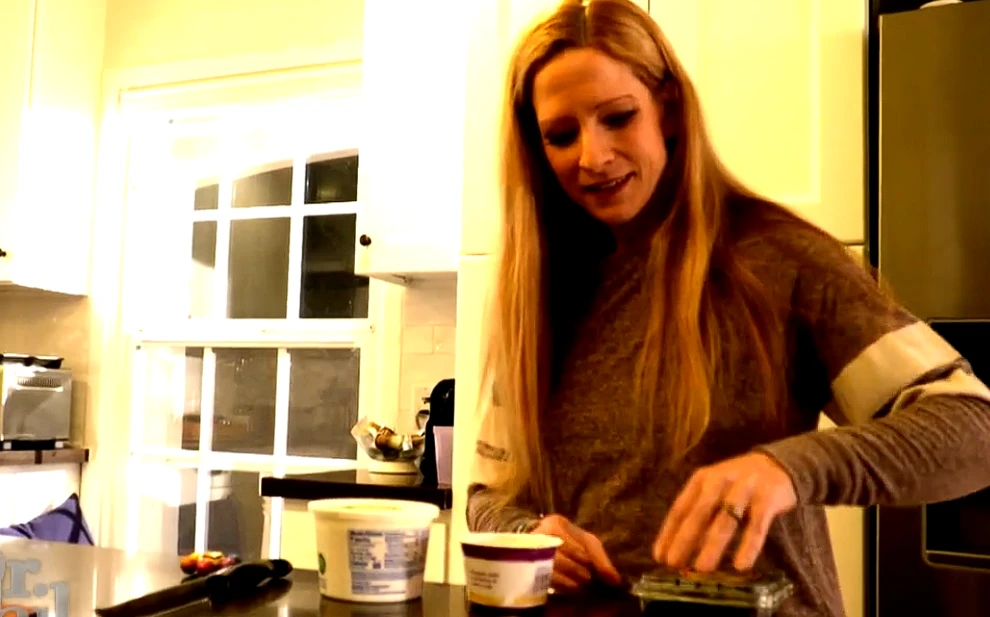
That moment shows how powerful the compulsion has become. She is not only choosing to move. She feels distress when she cannot move. She explains, “I just have a lot of anxiety. I feel like I’m about to have a panic attack.”
Her fear is specific. She says the calories she ate that morning are going “straight to my thighs and stomach.” This line shows that the problem is not just a step counter. It is a deeper fear about her body and what stillness means.
Technology Is Not the Real Cause
Liz’s mother says the behavior became severe after she got Liz a Fitbit. She explains that Liz had “always been obsessed with food,” but “the jogging” became much worse after the tracker.
Dr. Phil immediately clarifies that the device itself is not the villain. He says, “You don’t blame this on Fitbit,” adding that it can be “a good tool” when used properly.
This is an important point. Fitness trackers can help people become more active, sleep better, and monitor habits. But when someone already struggles with control, anxiety, or body fixation, a tracker can become fuel for obsession.
The problem is not the number on the screen by itself. The problem is the emotional meaning Liz attaches to that number. If she reaches the goal, she may feel temporary relief. If she falls short, she feels failure.
Dr. Phil’s Bigger Message
Dr. Phil’s deeper concern is that Liz’s life has become smaller, not healthier. A healthy routine should create energy, confidence, and balance. Liz’s routine creates pressure, fear, and isolation.
The 100,000-step goal may look impressive from the outside, but inside the routine is anxiety. She wakes up early, walks for hours, measures food, worries about calories, and feels panic when sitting still.

That is why the story is not about willpower. Liz has enormous discipline. The question is whether that discipline is helping her live better or trapping her in a pattern she cannot comfortably leave.
The most important distinction is between commitment and compulsion. Commitment allows choice. Compulsion removes peace. Liz’s own words suggest she is no longer fully free inside the routine.
Situation Judgment
Liz is not wrong for wanting to be active or care about her health. Exercise can be positive, and setting goals can help many people stay motivated.
However, this situation has moved far beyond ordinary fitness. When she says “jogging has consumed my life,” that is a clear sign that the routine has become unhealthy in its effect, even if the activity itself is usually healthy.

The main issue is not the number of steps alone. It is the anxiety, food obsession, body fear, and inability to rest without panic. Her family’s concern is understandable because Liz appears trapped in a cycle where walking is used to manage emotional distress.
The healthiest path forward would require more than simply telling her to stop walking. She needs support that addresses the fear underneath the behavior, especially the anxiety around food, calories, and body image.
Final Lesson
This Dr. Phil segment shows how something healthy can become harmful when fear takes control.
Walking is not the enemy. Fitness trackers are not the enemy. Food is not the enemy. The real problem begins when every part of life becomes a calculation and the person loses the ability to rest without guilt.
Liz’s story is powerful because it challenges a common assumption: more exercise is not always better. Health is not only about burning calories or reaching a number. It is also about balance, peace, flexibility, and the ability to live without constant fear.
The lesson is clear. A goal should improve life, not consume it. When discipline turns into distress, the question should not be, “How can I push harder?” The better question is, “What am I really trying to escape, control, or quiet inside myself?”