Beyond the Behavior
A teenager tells Dr. Phil he is afraid of his future stepfather’s 8-year-old son because of repeated destructive behavior at home. The discussion explores blended families, childhood behavioral challenges, safety concerns, and the importance of understanding the root causes rather than assigning blame.
Blending two families is rarely simple, especially when one child is experiencing significant behavioral challenges. In this Dr. Phil segment, a teenager admits that he locks his bedroom door every night because he fears what might happen if his future stepbrother enters his room. His concerns extend beyond himself—he worries about his younger sister, the family’s pets, and even the safety of their home. Rather than focusing only on the child’s behavior, Dr. Phil encourages the family to consider a much broader picture, asking whether everyone is looking at the right problem and whether the current family dynamic may be making the situation even more difficult.
A Teenager Living in Constant Fear
The episode begins with an emotional statement from the teenage son, who describes how daily life has changed inside his home.
He says, “I lock my door every night because I’m scared of the possibility of Bobby’s son coming into my room and hurting me.”
This is not simply a disagreement between siblings. His words describe a level of fear that affects how he sleeps and how secure he feels inside his own home.
He also worries about the people around him. He says, “My sister could get hurt… our animals… my mom… our house could potentially be destroyed.”
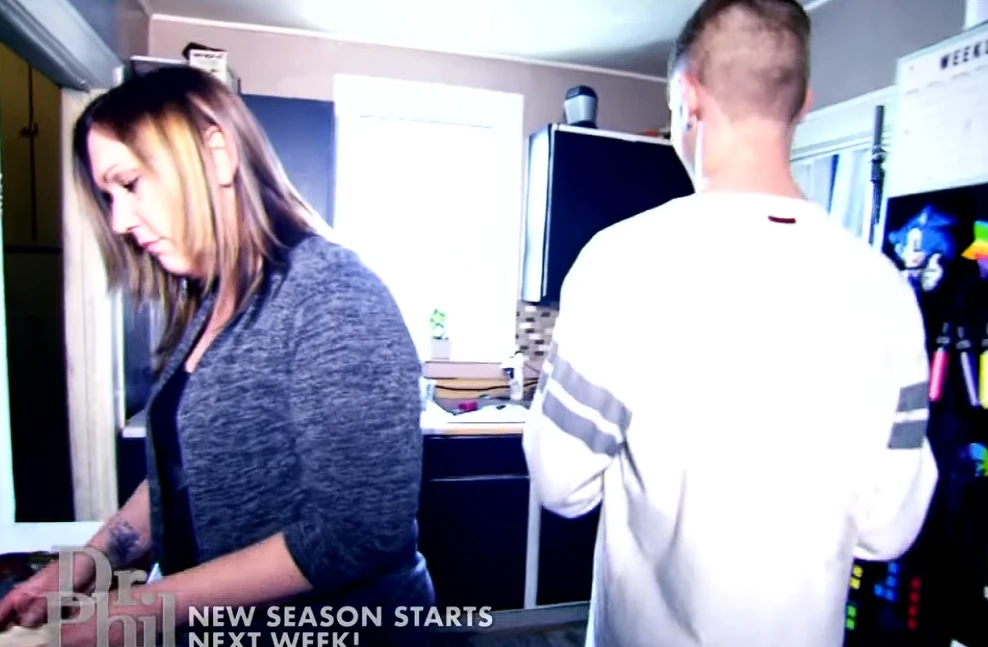
These concerns show that his anxiety extends beyond personal safety. He believes the entire household is living under constant uncertainty because of the child’s behavior.
Whether every fear ultimately becomes reality or not, the emotional impact is clear. A home is meant to be a place where children feel safe. When a teenager feels the need to lock his bedroom door every night, that sense of security has clearly been affected.
Behavior That Has Changed Daily Life
The teenager explains why he feels this way by describing several incidents he says he has witnessed.
He says, “I’ve seen Bobby’s son be very violent and destructive.”
He also recalls incidents involving harm to animals and says that the child once “caught our bathroom on fire.”
These experiences have shaped how he views the future.
He admits that if Bobby’s son “didn’t have these problems, we’d have a good life.”
Interestingly, he separates the child from the father. He says, “I miss Bobby around. Bobby’s a good guy.”

That distinction matters. The teenager is not rejecting the relationship between his mother and Bobby. Instead, he believes the behavioral challenges surrounding Bobby’s son have become the source of the family’s stress.
A Family Living Under Constant Pressure
The mother then explains how dramatically daily routines have changed.
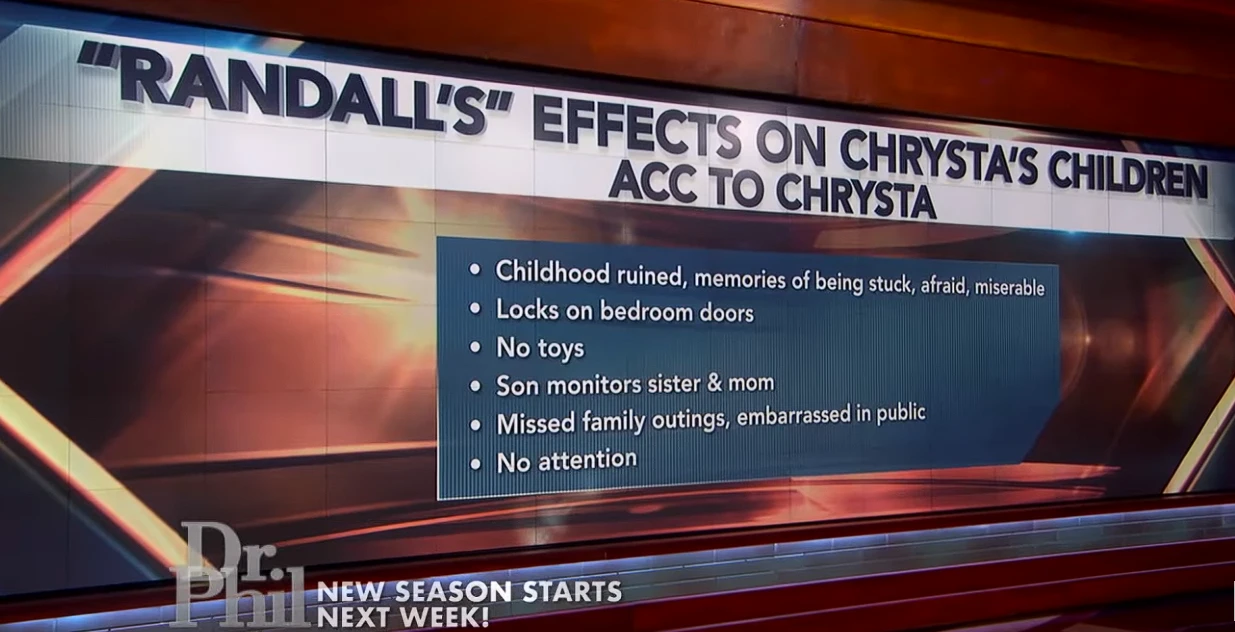
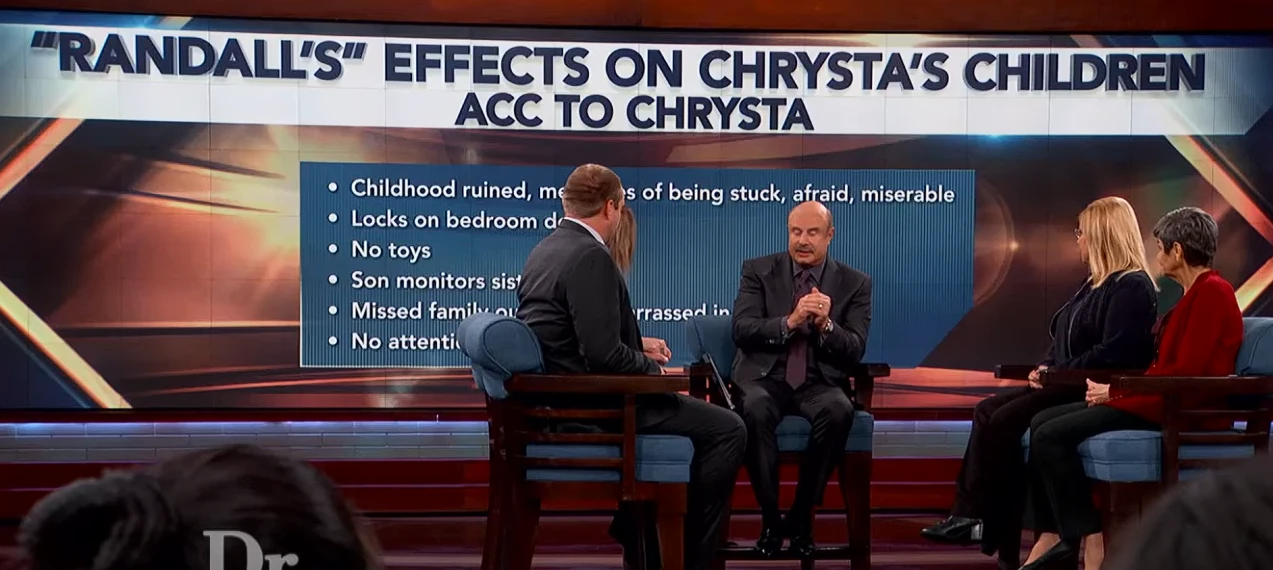
She says the children’s “last four years have just been ruined.”
She describes a home where bedroom doors have locks, favorite toys cannot safely remain out because they may be damaged, and the children live with constant monitoring instead of enjoying ordinary childhood activities.
She says, “That’s no way to live.”
Her description paints a picture of a household that has gradually adapted around one child’s needs.
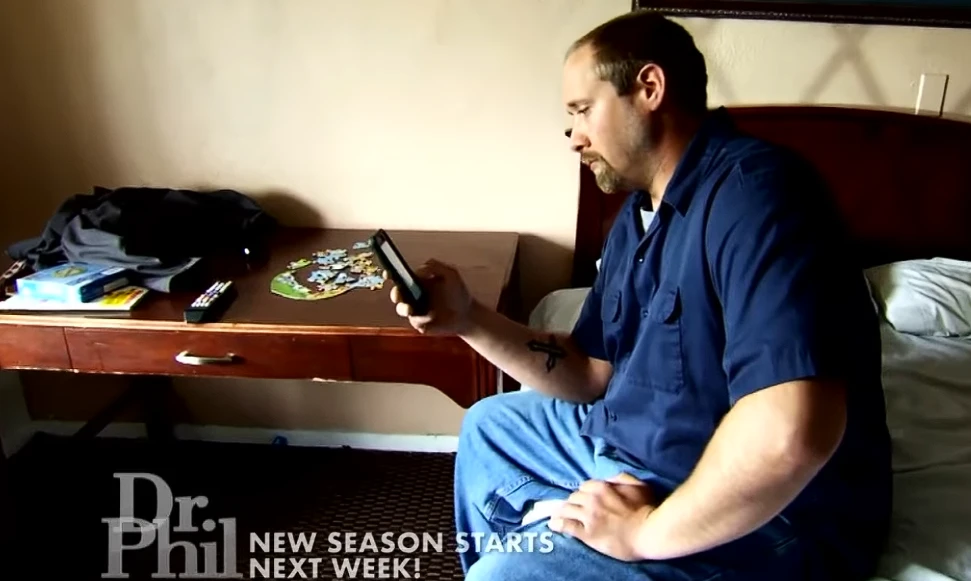
Family outings become difficult. Public situations become stressful. Even ordinary moments require preparation because everyone is anticipating what might happen next.
The emotional cost extends well beyond individual incidents. It affects the atmosphere of the entire home.
The Hidden Impact on Brothers and Sisters
Dr. Phil identifies an issue that many families experience when one child requires extraordinary attention.
He says, “This young man is an attention black hole.”
He immediately explains what he means.
“So the other children don’t get attention because this requires so much parental energy.”
His observation is not meant as criticism of the child. Instead, he is describing a family dynamic.
When one child needs constant supervision, emotional support, appointments, or intervention, parents naturally devote significant time and energy to those needs.

The unintended consequence is that brothers and sisters may begin feeling overlooked, even when parents are doing everything they can.
This does not mean parents care less about their other children. It means the family’s emotional resources become stretched in ways that are difficult for everyone.
Looking Beyond the Immediate Problem
Rather than stopping with the family’s current frustrations, Dr. Phil introduces an analogy.
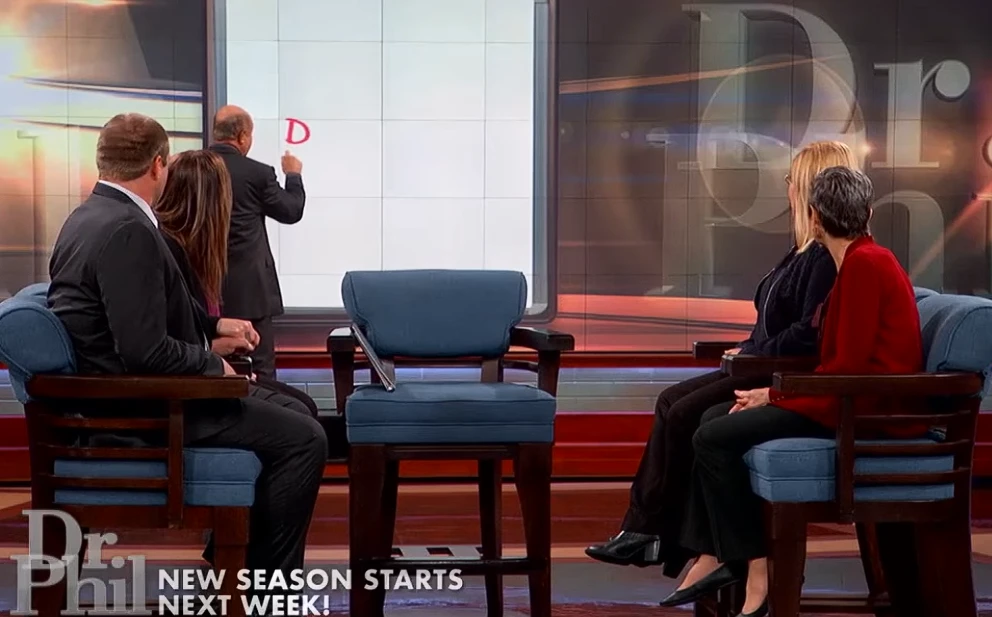
He says, “If you come up to an intersection and you make a wrong turn for five miles, that’s a twenty-mile mistake.”
He then uses a whiteboard to explain his point.
If someone travels five miles in the wrong direction, they must drive five miles back to the starting point before continuing another five miles toward the correct destination. The mistake becomes much larger than it originally appeared.
Dr. Phil applies this analogy to the family’s situation.
He suggests that if everyone focuses only on one explanation for the child’s behavior while overlooking other contributing factors, they may spend years moving away from the most effective solutions.
His message is clear: identifying the right problem is just as important as trying to solve it.
The Complexity of a Blended Family
Dr. Phil then draws another diagram showing how the family structure has changed over time.
He begins with “dad plus child.”
Then, he adds a future stepmother.
After that, he adds siblings.
Each addition changes the emotional dynamic.
Dr. Phil asks whether these changes have become “triggers that exacerbate this boy’s issues.”
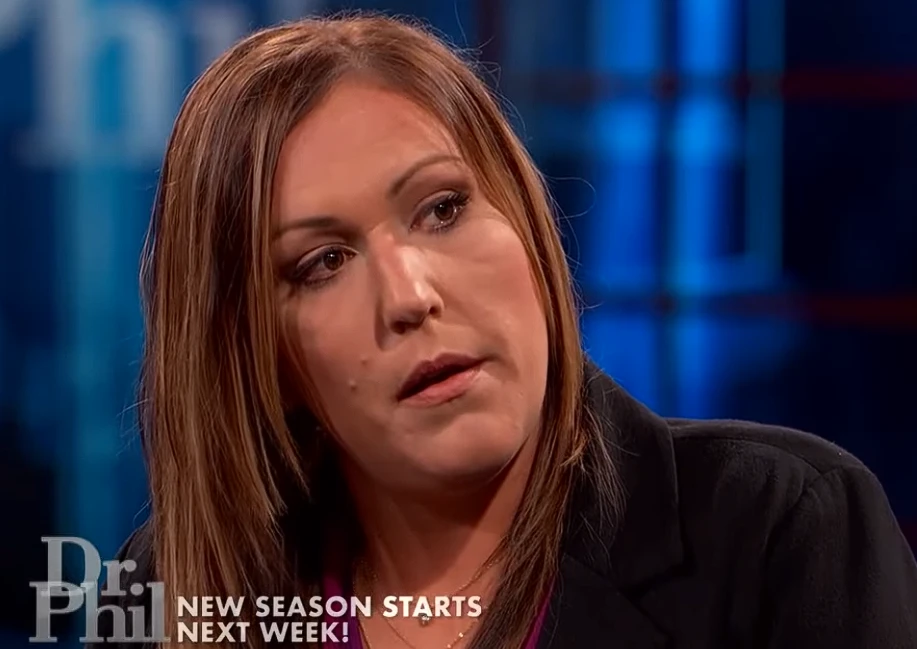
He explains that a child living alone with one parent experiences a very different environment than a child suddenly sharing attention with multiple new family members.
His point is not that blended families cause behavioral challenges. Instead, major family transitions can become stressful for children already struggling with emotional regulation or other difficulties.
Competition for Attention
One of Dr. Phil’s most thoughtful observations involves attention.
He describes siblings as “competitors for dad’s attention.”
That phrase should not be understood negatively.
Children naturally seek reassurance, affection, and time with their parents.
When family structures change, especially after divorce or remarriage, children sometimes worry that those relationships will change as well.
For a child already struggling emotionally, adjusting to new siblings, new routines, and new expectations may increase existing behavioral difficulties.
This perspective encourages viewers to think about behavior as communication rather than simply rule-breaking.
Understanding Without Excusing
Throughout the discussion, Dr. Phil carefully balances two important ideas.
First, the teenager’s fears deserve to be taken seriously.
If someone feels unsafe inside their own home, those feelings cannot simply be dismissed.
Second, the eight-year-old boy should not be reduced to his behavior alone.
Dr. Phil repeatedly encourages the family to ask why the behavior is happening instead of assuming it reflects the child’s character.

Understanding possible triggers does not excuse destructive behavior.
Instead, it creates a better chance of identifying effective support and reducing future conflict.
Dr. Phil’s Bigger Message
The discussion ultimately moves beyond one family’s immediate struggles.
Dr. Phil encourages everyone to examine the entire system rather than focusing only on one child.
Parents, siblings, routines, transitions, and emotional relationships all influence how a family functions.
If one part of the system changes, everyone else is affected as well.
That broader perspective helps shift the conversation away from blame and toward understanding.

Instead of asking, “Who is the problem?” Dr. Phil asks, “What is happening inside this family that everyone needs to understand better?”
Situation Judgment
The teenager’s concerns should not be dismissed. His description of locking his bedroom door and worrying about his family reflects genuine emotional distress. Every child deserves to feel safe in their own home.
At the same time, Dr. Phil reminds viewers that the eight-year-old is also a child who may be struggling with challenges beyond his ability to manage independently. His behavior should be addressed seriously, but understanding its causes is equally important.
The greatest challenge facing this blended family is balancing everyone’s needs. Protecting the safety and emotional well-being of all children while providing appropriate support for a child with significant behavioral difficulties requires patience, structure, and cooperation from every adult involved.
Final Lesson
This Dr. Phil segment demonstrates that difficult family situations rarely have simple solutions.
One child’s behavioral struggles can affect siblings, parents, routines, and the emotional atmosphere of an entire household. At the same time, that child often needs understanding and support rather than being defined only by past behavior.
Dr. Phil’s “20-mile mistake” analogy offers an important reminder. Families make the greatest progress when they identify the right problem instead of reacting only to its visible symptoms.
Healthy blended families require more than love alone. They require communication, realistic expectations, professional support when necessary, and a commitment to protecting every family member’s sense of safety and belonging.
Ultimately, the conversation reminds viewers that lasting solutions begin when fear, frustration, and blame are replaced with careful understanding, consistent guidance, and a willingness to work together as one family.
Teen Says He’s Afraid of His Future Stepbrother—Dr. Phil Looks
Beyond the Behavior
A teenager tells Dr. Phil he is afraid of his future stepfather’s 8-year-old son because of repeated destructive behavior at home. The discussion explores blended families, childhood behavioral challenges, safety concerns, and the importance of understanding the root causes rather than assigning blame.
Blending two families is rarely simple, especially when one child is experiencing significant behavioral challenges. In this Dr. Phil segment, a teenager admits that he locks his bedroom door every night because he fears what might happen if his future stepbrother enters his room. His concerns extend beyond himself—he worries about his younger sister, the family’s pets, and even the safety of their home. Rather than focusing only on the child’s behavior, Dr. Phil encourages the family to consider a much broader picture, asking whether everyone is looking at the right problem and whether the current family dynamic may be making the situation even more difficult.
A Teenager Living in Constant Fear
The episode begins with an emotional statement from the teenage son, who describes how daily life has changed inside his home.
He says, “I lock my door every night because I’m scared of the possibility of Bobby’s son coming into my room and hurting me.”
This is not simply a disagreement between siblings. His words describe a level of fear that affects how he sleeps and how secure he feels inside his own home.
He also worries about the people around him. He says, “My sister could get hurt… our animals… my mom… our house could potentially be destroyed.”
These concerns show that his anxiety extends beyond personal safety. He believes the entire household is living under constant uncertainty because of the child’s behavior.
Whether every fear ultimately becomes reality or not, the emotional impact is clear. A home is meant to be a place where children feel safe. When a teenager feels the need to lock his bedroom door every night, that sense of security has clearly been affected.
Behavior That Has Changed Daily Life
The teenager explains why he feels this way by describing several incidents he says he has witnessed.
He says, “I’ve seen Bobby’s son be very violent and destructive.”
He also recalls incidents involving harm to animals and says that the child once “caught our bathroom on fire.”
These experiences have shaped how he views the future.
He admits that if Bobby’s son “didn’t have these problems, we’d have a good life.”
Interestingly, he separates the child from the father. He says, “I miss Bobby around. Bobby’s a good guy.”
That distinction matters. The teenager is not rejecting the relationship between his mother and Bobby. Instead, he believes the behavioral challenges surrounding Bobby’s son have become the source of the family’s stress.
A Family Living Under Constant Pressure
The mother then explains how dramatically daily routines have changed.
She says the children’s “last four years have just been ruined.”
She describes a home where bedroom doors have locks, favorite toys cannot safely remain out because they may be damaged, and the children live with constant monitoring instead of enjoying ordinary childhood activities.
She says, “That’s no way to live.”
Her description paints a picture of a household that has gradually adapted around one child’s needs.
Family outings become difficult. Public situations become stressful. Even ordinary moments require preparation because everyone is anticipating what might happen next.
The emotional cost extends well beyond individual incidents. It affects the atmosphere of the entire home.
The Hidden Impact on Brothers and Sisters
Dr. Phil identifies an issue that many families experience when one child requires extraordinary attention.
He says, “This young man is an attention black hole.”
He immediately explains what he means.
“So the other children don’t get attention because this requires so much parental energy.”
His observation is not meant as criticism of the child. Instead, he is describing a family dynamic.
When one child needs constant supervision, emotional support, appointments, or intervention, parents naturally devote significant time and energy to those needs.
The unintended consequence is that brothers and sisters may begin feeling overlooked, even when parents are doing everything they can.
This does not mean parents care less about their other children. It means the family’s emotional resources become stretched in ways that are difficult for everyone.
Looking Beyond the Immediate Problem
Rather than stopping with the family’s current frustrations, Dr. Phil introduces an analogy.
He says, “If you come up to an intersection and you make a wrong turn for five miles, that’s a twenty-mile mistake.”
He then uses a whiteboard to explain his point.
If someone travels five miles in the wrong direction, they must drive five miles back to the starting point before continuing another five miles toward the correct destination. The mistake becomes much larger than it originally appeared.
Dr. Phil applies this analogy to the family’s situation.
He suggests that if everyone focuses only on one explanation for the child’s behavior while overlooking other contributing factors, they may spend years moving away from the most effective solutions.
His message is clear: identifying the right problem is just as important as trying to solve it.
The Complexity of a Blended Family
Dr. Phil then draws another diagram showing how the family structure has changed over time.
He begins with “dad plus child.”
Then, he adds a future stepmother.
After that, he adds siblings.
Each addition changes the emotional dynamic.
Dr. Phil asks whether these changes have become “triggers that exacerbate this boy’s issues.”
He explains that a child living alone with one parent experiences a very different environment than a child suddenly sharing attention with multiple new family members.
His point is not that blended families cause behavioral challenges. Instead, major family transitions can become stressful for children already struggling with emotional regulation or other difficulties.
Competition for Attention
One of Dr. Phil’s most thoughtful observations involves attention.
He describes siblings as “competitors for dad’s attention.”
That phrase should not be understood negatively.
Children naturally seek reassurance, affection, and time with their parents.
When family structures change, especially after divorce or remarriage, children sometimes worry that those relationships will change as well.
For a child already struggling emotionally, adjusting to new siblings, new routines, and new expectations may increase existing behavioral difficulties.
This perspective encourages viewers to think about behavior as communication rather than simply rule-breaking.
Understanding Without Excusing
Throughout the discussion, Dr. Phil carefully balances two important ideas.
First, the teenager’s fears deserve to be taken seriously.
If someone feels unsafe inside their own home, those feelings cannot simply be dismissed.
Second, the eight-year-old boy should not be reduced to his behavior alone.
Dr. Phil repeatedly encourages the family to ask why the behavior is happening instead of assuming it reflects the child’s character.
Understanding possible triggers does not excuse destructive behavior.
Instead, it creates a better chance of identifying effective support and reducing future conflict.
Dr. Phil’s Bigger Message
The discussion ultimately moves beyond one family’s immediate struggles.
Dr. Phil encourages everyone to examine the entire system rather than focusing only on one child.
Parents, siblings, routines, transitions, and emotional relationships all influence how a family functions.
If one part of the system changes, everyone else is affected as well.
That broader perspective helps shift the conversation away from blame and toward understanding.
Instead of asking, “Who is the problem?” Dr. Phil asks, “What is happening inside this family that everyone needs to understand better?”
Situation Judgment
The teenager’s concerns should not be dismissed. His description of locking his bedroom door and worrying about his family reflects genuine emotional distress. Every child deserves to feel safe in their own home.
At the same time, Dr. Phil reminds viewers that the eight-year-old is also a child who may be struggling with challenges beyond his ability to manage independently. His behavior should be addressed seriously, but understanding its causes is equally important.
The greatest challenge facing this blended family is balancing everyone’s needs. Protecting the safety and emotional well-being of all children while providing appropriate support for a child with significant behavioral difficulties requires patience, structure, and cooperation from every adult involved.
Final Lesson
This Dr. Phil segment demonstrates that difficult family situations rarely have simple solutions.
One child’s behavioral struggles can affect siblings, parents, routines, and the emotional atmosphere of an entire household. At the same time, that child often needs understanding and support rather than being defined only by past behavior.
Dr. Phil’s “20-mile mistake” analogy offers an important reminder. Families make the greatest progress when they identify the right problem instead of reacting only to its visible symptoms.
Healthy blended families require more than love alone. They require communication, realistic expectations, professional support when necessary, and a commitment to protecting every family member’s sense of safety and belonging.
Ultimately, the conversation reminds viewers that lasting solutions begin when fear, frustration, and blame are replaced with careful understanding, consistent guidance, and a willingness to work together as one family.