Dr. Phil Reveals How One Ordinary Charging Cable Could Put Your Personal Data at Risk
A cybersecurity expert joins Dr. Phil to demonstrate how an ordinary-looking USB cable can be modified to compromise a computer. The discussion explores social engineering, digital security awareness, and practical habits that help reduce cybersecurity risks.
Most people worry about suspicious emails or unknown websites when thinking about cybersecurity. Far fewer expect an ordinary charging cable to become part of a security demonstration. In this Dr. Phil segment, cybersecurity expert Ryan Montgomery shows how attackers can take advantage of everyday habits by modifying common accessories that appear completely normal. Rather than focusing on fear, the demonstration highlights an important lesson: technology is only one part of cybersecurity. Human behavior, trust, and awareness are often the first places attackers look for opportunities. The conversation becomes a practical reminder that protecting personal information begins with everyday decisions that many people rarely think twice about.
A Simple Question Reveals a Common Misunderstanding
The discussion begins with what appears to be a basic cybersecurity question. Ryan asks whether people know they should never plug an unfamiliar USB drive into their computer. He explains, “You’re not ever supposed to plug in a USB drive that you find on the ground or that someone sends you in the mail.”
Dr. Phil responds honestly that while he had never personally done that, he also had not fully considered why such advice exists.
Ryan explains the reason clearly. When an unknown USB device is connected to a computer, it may install malicious software without the user realizing what has happened.

Many people assume cybersecurity attacks require sophisticated hacking skills directed specifically at them. Instead, Ryan points out that attackers often succeed because ordinary people trust ordinary objects.
This opening immediately shifts the conversation away from complicated technical language. The greatest vulnerability is often not the computer itself but the small decisions people make every day.
Cybersecurity Is No Longer Just About Suspicious Emails
Ryan then expands the discussion beyond USB drives.
He asks Dr. Phil whether he uses an iPhone or Android device and reminds him that everyone charges their phones using a cable every day.
He then introduces a surprising idea.
“What if I could tell you we could modify that cable so when it’s plugged into your computer, we could remotely command the cable to install malware?”
Dr. Phil immediately reacts with surprise.
“The cable?”
Ryan replies, “The cable itself.”
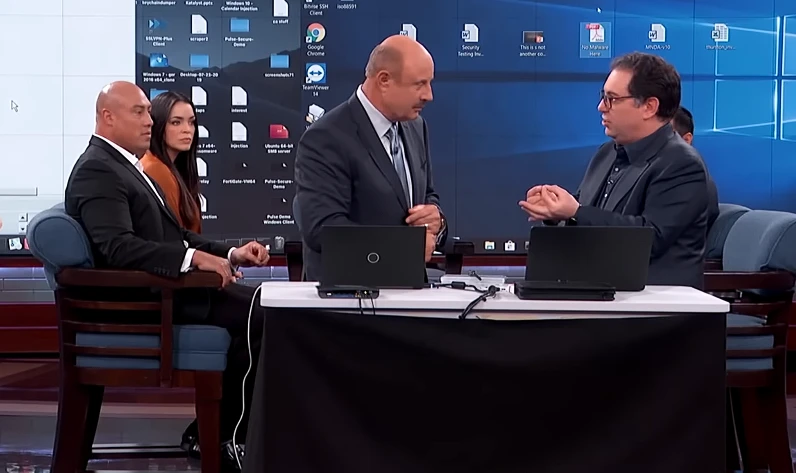
The moment is powerful because almost everyone has handled thousands of charging cables without ever questioning whether the cable itself could present a risk.
Unlike suspicious software downloads or obvious scam messages, a charging cable appears completely ordinary. That familiarity is exactly what makes the demonstration so memorable.
Why Ordinary Objects Can Become Powerful Tools
Ryan holds up what appears to be an ordinary white charging cable and asks, “Doesn’t that look like an ordinary charging cable to you?”
Dr. Phil agrees that it does.
Ryan then explains that an attacker could replace a legitimate cable inside an organization or include a modified cable inside what appears to be a factory-sealed package.
He describes this as part of a social engineering attack.
Rather than relying entirely on software vulnerabilities, social engineering targets human trust. People naturally believe familiar objects are safe. Attackers attempt to take advantage of that expectation.

Ryan explains that someone might receive what looks like a brand-new phone with a cable packaged inside the box. To the recipient, everything appears authentic.
The hidden difference is that the cable has been modified before it ever reaches the user.
The demonstration reminds viewers that cybersecurity does not only involve technology. It also involves recognizing how trust can be manipulated.
The Live Demonstration Captures Everyone’s Attention
Rather than stopping with theory, Ryan demonstrates how the modified cable works.
He explains that one computer represents the attacker while another represents the victim.
“We’re going to plug this in,” he says.
He then tells Dr. Phil to press a single button on a small transmitter.
Within seconds, text begins appearing automatically on the victim computer.
Ryan explains that malicious software has now been installed.
“That’s it. That’s all the victim sees.”
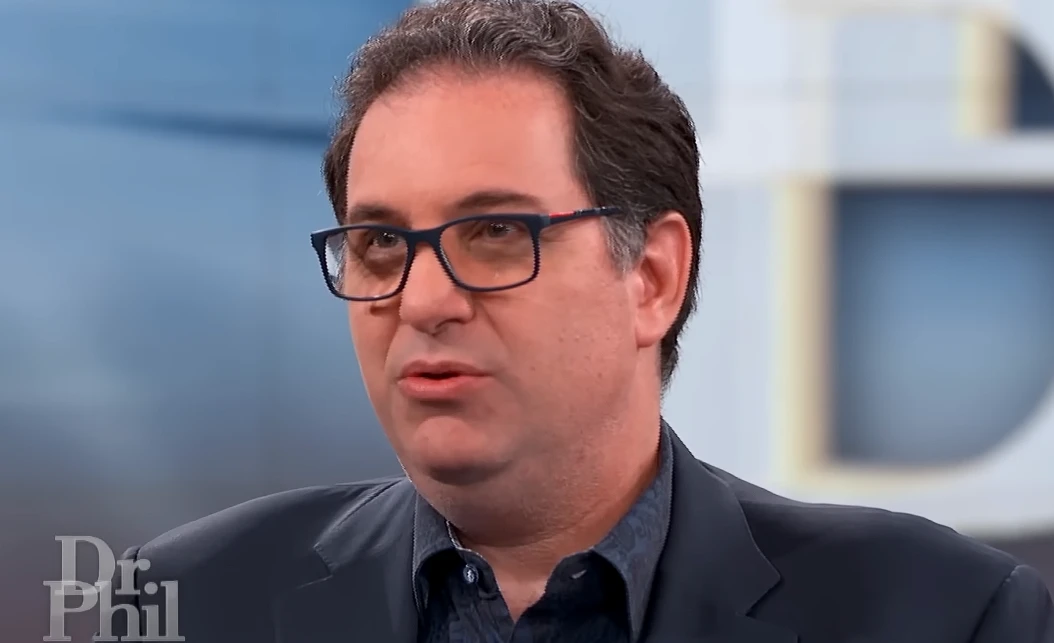
The demonstration is intentionally simple. There are no dramatic warning screens or complicated commands visible to the victim.
Instead, Ryan emphasizes how quickly an attacker could establish access while the computer user notices very little.
The message is not that every cable is dangerous. The message is that appearances alone cannot always confirm whether hardware has been altered.
Human Trust Is Often the First Target
One of the strongest lessons in the segment has very little to do with technology.
Ryan repeatedly explains how attackers rely on human assumptions.
People trust promotional giveaways.
People trust sealed packaging.
People trust cables that look identical to every other cable they have ever used.
In other words, attackers often succeed because they understand normal human behavior.
Cybersecurity professionals refer to this as social engineering because the attack focuses first on influencing people rather than defeating sophisticated computer defenses.

Technology alone cannot solve this problem.
Awareness becomes equally important.
The more people understand how attackers think, the less likely they are to overlook unusual situations that deserve additional caution.
What Could an Attacker Potentially Access?
Ryan explains that once malicious software has been installed during the demonstration, the attacker gains extensive access to the affected computer.
He says, “I could go through all the files on the computer.”
He also explains that access to connected hardware could potentially allow someone to activate functions such as a microphone or webcam if appropriate protections are not in place.
Rather than presenting this as something that will happen in every situation, the demonstration illustrates why unauthorized hardware should be treated seriously.
Modern computers often store personal photographs, financial information, work documents, saved passwords, and private communications.

The demonstration reminds viewers that protecting devices is not simply about avoiding inconvenience. It is about protecting personal information that has real value.
Convenience and Security Often Compete
One reason demonstrations like this are effective is that they challenge habits people rarely question.
Borrowing a charger.
Using a cable left in a conference room.
Accepting free promotional accessories.
Picking up a USB drive that appears valuable.
None of these actions necessarily creates danger by itself.
However, Ryan encourages viewers to think more carefully before connecting unfamiliar hardware to devices containing personal information.
Convenience often encourages quick decisions.

Cybersecurity encourages thoughtful decisions.
Finding the balance between those two approaches has become increasingly important as technology becomes more integrated into everyday life.
The Demonstration Is About Awareness, Not Fear
It would be easy to watch the demonstration and conclude that every charging cable or USB accessory should immediately be viewed with suspicion.
That is not Ryan’s message.
Instead, the demonstration encourages awareness.
Most charging cables people purchase through legitimate retail channels are intended for normal everyday use.
Ryan’s demonstration shows what is technically possible when equipment has been intentionally modified.
The purpose is educational rather than alarming.
By understanding how attackers may attempt to exploit trust, people can make more informed decisions without becoming unnecessarily fearful of ordinary technology.
Practical Habits That Strengthen Digital Security
Although the demonstration focuses on specialized hardware, its broader lessons apply to everyday technology use.
Using accessories obtained through trusted sources, avoiding unknown storage devices, keeping operating systems updated, and remaining cautious about unexpected hardware all contribute to stronger digital security.

Equally important is developing healthy skepticism.
If something appears unusual, arrives unexpectedly, or encourages immediate action without explanation, taking time to verify it is often the safest response.
Cybersecurity is rarely built around one dramatic decision.
Instead, it is strengthened through many small habits repeated consistently over time.
Situation Judgment
Ryan’s demonstration successfully illustrates an important cybersecurity principle without encouraging panic. The modified cable shown during the segment is presented as an educational example designed to help viewers understand how attackers may exploit trust in familiar technology.
Dr. Phil’s questions also reflect the perspective of many viewers. His surprise at learning that an ordinary-looking cable could potentially be modified demonstrates how easily everyday assumptions can influence security decisions.
The strongest takeaway is not that people should distrust every device they own. Rather, they should recognize that cybersecurity depends on both technology and informed decision-making.
Final Lesson
This Dr. Phil segment reminds viewers that modern cybersecurity extends far beyond passwords and antivirus software.
Technology continues to evolve, and so do the methods used by attackers who attempt to exploit everyday habits and assumptions.
The demonstration encourages viewers to become more thoughtful about unfamiliar hardware, unexpected devices, and situations that rely primarily on trust rather than verification.

At the same time, the episode offers a reassuring message. Awareness is one of the most effective security tools available. Learning how common social engineering techniques work allows people to recognize potential risks before they become larger problems.
Ultimately, the strongest defense is not fear of technology but informed use of it. When people combine practical security habits with thoughtful decision-making, they greatly reduce the opportunities for attackers to take advantage of everyday routines.