A Couple Disagrees Over Household Rules, Independence, and Respect
A woman tells Dr. Phil that her fiancé has created a long list of rules that affect nearly every part of her daily life. The discussion explores healthy relationship boundaries, communication, financial expectations, and the difference between guidance and control.
Every relationship requires compromise, shared responsibilities, and mutual respect. However, problems can arise when one partner feels that compromise has become one-sided. In this Dr. Phil episode, Rebecca says her fiancé, Josh, has established so many rules that she no longer feels independent. From household chores and finances to friendships and personal decisions, she believes nearly every aspect of her daily life is monitored. Josh disagrees, insisting he simply wants structure, responsibility, and teamwork. As Dr. Phil carefully examines both perspectives, the conversation shifts away from accusations and toward a larger question: where is the line between reasonable expectations and excessive control?
A List of Rules That Immediately Raises Questions
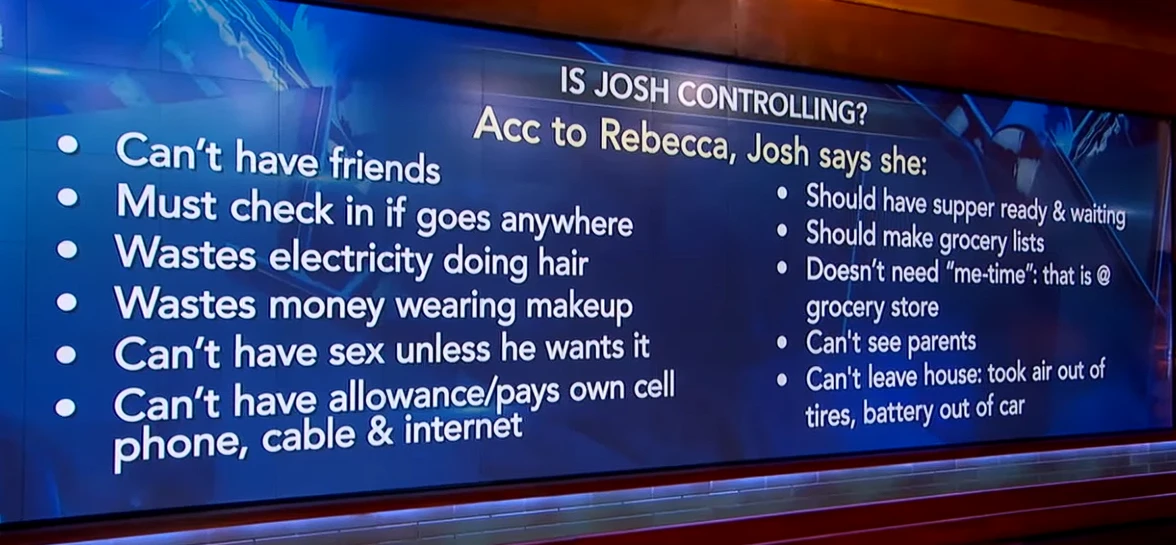
The discussion begins with Dr. Phil reading a lengthy list of concerns that Rebecca says define her relationship.
According to the list, Josh tells her she must check in whenever she goes somewhere, should not waste electricity while drying her hair, should not spend too much money on makeup, should always have dinner prepared, should carefully organize grocery shopping, and should not spend unnecessary time away from home.
The list also includes claims that she cannot freely visit her parents and that, during arguments, access to the family vehicle became restricted.

As Dr. Phil reads through the list, Josh repeatedly asks for the opportunity to respond.
Instead of accepting every statement as fact, Dr. Phil pauses after each major point and asks both people to explain exactly what happened.
This approach becomes important throughout the interview because it separates broad accusations from specific behaviors that can be discussed more carefully.
The Disagreement Over Friendships
One of the first claims Dr. Phil addresses concerns friendships.
He asks Rebecca directly, “You say he says you can’t have friends. What do you mean by that?”
Rebecca immediately clarifies her statement.
“Not that I can’t have friends.”
Dr. Phil follows up, asking why she originally described it that way.
Rebecca explains, “I can have friends, but he’s got a problem with everybody, so I feel like I can’t have friends.”
That clarification changes the discussion.
Rather than describing an absolute prohibition, Rebecca says the atmosphere surrounding friendships makes her feel discouraged from maintaining them.
Josh offers a different explanation.
“She doesn’t have friends,” he says. “I encourage her to pick and choose the friends that we can be comfortable with.”
The difference between these two perspectives is significant.
Rebecca experiences the conversations as restrictions.
Josh believes he is encouraging thoughtful decisions about relationships.
This illustrates how communication can become strained when two people interpret the same conversations very differently.
Who Should Lead the Relationship?
The discussion becomes even more revealing when Dr. Phil asks about leadership within the relationship.
He tells Josh, “She says you’re the captain of this relationship.”
Josh responds, “I would like to be.”
However, he quickly adds that he ultimately wants “a 50/50” relationship where both partners contribute equally.
Rebecca remembers those conversations differently.
She says Josh once told her, “I want to be the captain of this relationship so I can teach you how I want it, and then you’ll take over.”
Josh says he does not remember saying those exact words.

Instead, he explains that he wanted the opportunity to “suggest the ways” he had carefully thought about managing their household.
This exchange highlights a recurring issue.
Josh believes he is offering guidance.
Rebecca believes she is being managed.
Dr. Phil Asks the Toughest Question
One of the strongest moments in the segment comes when Dr. Phil asks Josh directly, “Are you intellectually superior to her?”
Josh answers honestly.
“I would say so.”
He explains that he believes Rebecca focuses on past events while he spends more time planning for the future.
Although Josh presents this as a difference in thinking styles, the answer immediately changes the tone of the interview.
Relationships built on mutual respect generally require both partners to believe each person’s opinions have value.
When one partner consistently views themselves as intellectually above the other, everyday conversations may gradually become lectures rather than discussions.
Dr. Phil’s question is not simply about intelligence.
It is about equality.
Healthy partnerships rely on cooperation, even when strengths differ.
Money Becomes Another Source of Tension
Another recurring topic involves household finances.
Rebecca says Josh criticizes how long she spends drying her hair because of electricity costs.
Josh denies making that exact statement.
Instead, he explains that he simply wants greater awareness of expenses.
“I want her to be more economic,” he says.
Dr. Phil responds with humor.
“So you want her to dry her hair more quickly?”
Josh replies that long hair naturally takes more time but insists his concern is responsible spending rather than appearance.

The exchange demonstrates how small financial discussions can become emotionally significant when one partner feels constantly monitored.
Saving money is a reasonable goal for many households.
The challenge lies in discussing finances without making the other person feel criticized over ordinary daily routines.
Responsibility Versus Control
Throughout the interview, Josh repeatedly returns to one phrase.
“I need her to do her share.”
He believes many of his expectations are connected to shared responsibility rather than control.
From his perspective, planning grocery shopping, preparing meals, and managing expenses help the household function more efficiently.
Rebecca, however, experiences those same expectations differently.
She believes the rules extend into personal choices that should remain her own.

This distinction becomes the central issue of the episode.
Shared expectations are a normal part of long-term relationships.
Problems arise when one partner feels those expectations leave little room for independence or personal decision-making.
The Importance of Mutual Respect
Dr. Phil carefully avoids deciding the conversation by simply choosing one side.
Instead, he focuses on how each partner communicates.
Rebecca often describes how Josh’s expectations make her feel.
Josh frequently explains why he believes his expectations are practical.
Both perspectives deserve consideration.
However, successful communication depends not only on intentions but also on impact.
A partner may believe they are offering helpful advice.
The other person may experience that advice as constant correction.
Understanding that difference is often the first step toward healthier communication.
When Everyday Decisions Become Relationship Issues
One of the strongest lessons from the segment is that relationship problems often develop through ordinary moments rather than dramatic events.
Drying hair.
Buying groceries.
Meeting friends.
Running errands.
Preparing dinner.
None of these situations appear unusual by themselves.
However, when nearly every daily activity becomes part of an ongoing disagreement, emotional pressure gradually increases.

Over time, partners may stop discussing the original issue and instead begin reacting to the feeling of being criticized or misunderstood.
Dr. Phil’s Bigger Message
Although the conversation focuses on one couple, Dr. Phil’s broader message applies to many relationships.
Healthy partnerships require teamwork rather than supervision.
Planning for the future is valuable.
Managing finances responsibly is important.
Sharing household responsibilities matters.
But those goals are most successful when reached through collaboration rather than one partner directing the other.
Respect grows when both people believe their opinions are heard and valued equally.
Situation Judgment
Based on this discussion, both Rebecca and Josh appear to want a stable relationship, but they disagree strongly about how that stability should be achieved.
Josh consistently describes his expectations as practical efforts to improve household organization and financial responsibility. Rebecca experiences many of those same expectations as restrictions that reduce her sense of independence.

The conversation also suggests that communication has become increasingly defensive. Josh often explains his intentions, while Rebecca emphasizes how those behaviors make her feel. Until both perspectives receive equal attention, misunderstandings are likely to continue.
Final Lesson
This Dr. Phil segment demonstrates that strong relationships require much more than good intentions.
Household routines, financial planning, and shared responsibilities are important, but they should strengthen a partnership rather than create ongoing tension.
Couples benefit most when expectations are discussed openly and adjusted together instead of being presented as one person’s system for the other to follow.
The discussion also reminds viewers that respect includes listening as much as leading. Even practical advice can become discouraging if one partner feels constantly corrected or evaluated.

Ultimately, healthy relationships thrive when responsibility and independence exist together. The strongest partnerships are built not on control or constant criticism, but on communication, trust, shared decision-making, and mutual respect.