Dr. Phil examines how 9/11 trauma, serious health problems, isolation, and family exhaustion transformed first responder Kenny’s life and relationships
A 9/11 Responder’s Private Diary Changes Everything on Dr. Phil
The Dr. Phil 9/11 first responder episode centered on Kenny, a search-and-rescue worker whose life changed dramatically after he was sent to Ground Zero. Years later, Kenny described serious physical health problems alongside PTSD, anxiety, panic attacks, nightmares, and depression. His wife, Cindy, and daughter, Gina, described another consequence: the man they remembered as active and engaged had become increasingly isolated, fearful, and focused on what happened after the attacks.
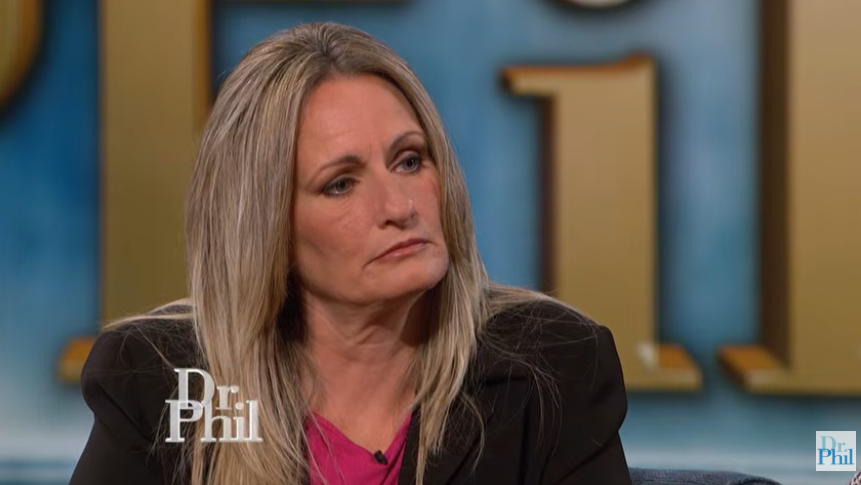
At first, the family framed the problem harshly. Gina said she was angry that her father could not “get over it,” while Cindy questioned whether Kenny had allowed his health concerns to define him. But the discussion changed after Dr. Phil introduced Kenny’s private diary and the family heard details they had never known. The case became less about forcing someone to forget trauma and more about understanding it without allowing it to consume the rest of his life.
How 9/11 Changed Kenny’s Identity and Daily Life
The episode establishes an important contrast between Kenny before and after his Ground Zero work. Before September 11, his family remembered an active husband and father who worked, played sports, went to parks, and spent time with his daughter.
Afterward, according to all three family members, his physical health, emotional functioning, and daily routines changed dramatically. That contrast became essential because Dr. Phil ultimately treated Kenny’s struggle as both a trauma problem and an identity problem.
Kenny Said His Mind Was Still “Back Down on the Pile”
Kenny described being called to Ground Zero while working for the highway department and joining a search-and-rescue team.
Years later, he said:
“9/11 ruined my life. It just took everything.”
He reported heart and lung disease and said he had been diagnosed with PTSD, anxiety, night terrors, panic attacks, and severe depression.
His daily behavior reflected that distress.
“I sit home and watch TV, but I’m not watching TV cuz I can’t concentrate,” Kenny explained.
When Cindy and Gina tried talking to him, he said he often tuned them out because:
“my mind is still back down on the pile.”
He also described fear that something dangerous might happen again and said he locked the doors because of that fear.
The transcript therefore presents his isolation as more than simple inactivity. Kenny connected it directly to ongoing memories, anxiety, physical illness, and a sense of threat that persisted long after his rescue work ended.
His Family Experienced a Different Kind of Loss
Cindy described the contrast simply:
“Before 9/11, my husband would play sports, take the kids out to the park.”
Then she said:
“Me and Kenny have no life right now. After 9/11, there’s nothing.”
Gina offered a similar picture. She remembered going to movies, bowling, and watching television with her father before bed.
Now, she said, ordinary television could somehow become connected to September 11 in conversation.
“9/11 definitely stole my dad from me,” Gina said.
That sentence became one of the most important descriptions in the episode.
Kenny had survived, but his family felt that parts of the person they knew before the attacks were no longer available to them.
Their frustration came from living with that change for years without knowing how to respond to it.
The Family Initially Saw Kenny as Someone Who Would Not Move On
One of the most difficult parts of the episode is the gulf between Kenny’s internal experience and how his family interpreted his behavior.
Gina and Cindy did not initially understand many of the details he had witnessed because Kenny had never fully shared them. Without that information, his continuing focus on September 11 increasingly looked to them like a choice rather than a trauma response.
Gina Said Compassion Had Turned Into Anger
Gina was 18 when she wrote to Dr. Phil asking for help.
Asked what motivated the letter, she said it seemed there was:
“absolutely no other recognition that he could get that he needed, no help that we can get.”
She told Dr. Phil she believed it was time for Kenny to move forward.
When asked how her feelings had evolved, Gina said:
“I did feel bad. Now, I would say I’m angry that he can’t get over it.”
That statement reflects the family’s exhaustion, but the rest of the episode shows how incomplete their understanding was.
Gina knew generally that her father had experienced terrible conditions at Ground Zero. She had not heard the detailed contemporaneous account contained in his diary.
Once she did, her tone changed markedly.
Cindy Questioned Whether Kenny Had Let Illness Define Him
Cindy also described Kenny as constantly sick and stressed, particularly about his ability to support the family if his condition worsened.
At the same time, she acknowledged believing he sometimes focused excessively on his health.
Dr. Phil asked whether she thought Kenny:
“hangs on to this and focuses on this and lets it define him?”
Cindy answered:
“True. I do.”
Yet she also became emotional after hearing portions of the diary.
“I feel bad for saying it now,” she said.
That reaction was significant because it demonstrated that the family’s judgment was changing as their knowledge changed.
The episode did not suggest Cindy’s exhaustion was unreal.
Instead, it showed that caregiver frustration and trauma-related suffering could coexist inside the same household.
Kenny’s Private Diary Changed the Credibility of the Family Narrative
The emotional turning point came when Dr. Phil introduced a diary Kenny had written around the time he worked at Ground Zero.
Kenny said no one had ever read it, including members of his family and even his doctors. Dr. Phil deliberately shared only selected portions, noting that some material was too disturbing to present in detail.
The Diary Provided Contemporary Evidence of What Kenny Experienced
The importance of the diary was not simply emotional.
It was a contemporaneous record from the period itself rather than a memory reconstructed years later.
Kenny had documented repeated recovery work, exposure to devastating conditions, and the emotional toll of repeatedly searching without finding survivors.
One entry eventually reached the point:
“I can’t take it anymore. There’s too much death.”
He then wrote:
“I can’t write anymore.”
For Community Standards and basic sensitivity, the more graphic details do not need to be repeated here. What matters analytically is that the diary demonstrated sustained exposure to traumatic scenes rather than a single frightening moment.
Dr. Phil told Kenny:
“you and I both know that you saw a lot of terrible things there.”
Kenny answered:
“A lot.”
The diary gave Cindy and Gina access to information Kenny had kept almost entirely to himself.
Gina’s View Changed Once She Understood More
After hearing excerpts, Gina said she was:
“definitely a little shocked.”
She explained that she had always known generally what her father had done but had never understood it in such detail.
Her new description of him was dramatically different:
“he’s a hero, but he also became a victim of 9/11.”
She continued:
“nobody’s helping. Nobody knows what to do. And I don’t know what to do.”
That statement is central to the credibility analysis.
Earlier, Gina had characterized her father as someone who simply could not “get over it.”
After gaining new evidence, she reframed the problem as one the family did not know how to solve.
Dr. Phil explicitly noticed the difference, telling her she now had “a very different tone.”
The shift suggests that some of the family conflict had grown not from a lack of love, but from a lack of shared understanding.
Silence Had Become Part of Kenny’s Trauma Cycle
Kenny’s family did not know the full extent of his experience partly because he had chosen not to tell them.
He said he did not talk about it at home and had never shown anyone the diary.
His intention appears to have been protective. But Dr. Phil highlighted an unintended consequence: the silence prevented the people closest to him from understanding what they were actually living with.
Kenny Said He Did Not Know How to Explain It
At one point, Kenny asked:
“How do I sit there and explain to her what I see now?”
He questioned how he could tell his daughter what he had witnessed and done during the recovery operation.
From his perspective, withholding the details may have seemed like a way to protect her from images he himself struggled to process.
But Dr. Phil suggested that Gina may have experienced that silence differently.
“She probably feels hurt that you did not tell her what you went through,” he said.
Kenny answered:
“I didn’t tell anybody.”
Dr. Phil responded:
“Yeah, that’s probably the problem.”
That did not mean Kenny was obligated to recount traumatic details repeatedly.
In fact, Dr. Phil would soon argue almost the opposite: once the family understood, the goal should not be endless repetition but forward movement.
The Family Had Started Relating to Kenny as a Problem
Dr. Phil brought Kenny and Gina face-to-face and introduced another important concept.
“There’s a way that we dehumanize one another,” he said, when people stop interacting with someone as a person and begin interacting with that person only as:
“a problem.”
He warned against reducing Kenny to labels such as “whiner,” “taker,” or “hypochondriac.”
This was one of the episode’s strongest family-system observations.
For years, Gina and Cindy had been living with Kenny’s withdrawal, illness, anxiety, and repeated references to September 11. Over time, those symptoms had begun to overshadow the person experiencing them.
The diary disrupted that pattern.
It reminded them that Kenny’s behavior had a history and context, even if that did not mean the family had to accept permanent stagnation.
Dr. Phil Identified Loss of Identity as the Deeper Issue
The most important shift in Dr. Phil’s analysis came when he moved beyond symptoms and asked what Kenny believed those symptoms meant about him as a husband and father.
Kenny had once defined himself through strength, work, protection, and supporting his family. Illness and fear had disrupted those roles.
Kenny Felt He Could No Longer Protect His Family
Dr. Phil described Kenny as someone who had once:
“defined himself with his strength.”
He then asked whether Kenny felt he had lost that role.
Kenny answered:
“Yes. Big time.”
Dr. Phil encouraged him to explain directly to Gina what it felt like to wake up believing he might not be able to provide for and protect her.
Kenny said:
“It hurts. It hurts deeply inside.”
He spoke about worrying that he might not be present for important future moments in her life.
Then he said:
“I’m not proud of myself anymore because I feel I let you down.”
That admission reframed much of his earlier behavior.
The transcript suggests that underneath repeated health concerns and withdrawal was a deep fear about usefulness, responsibility, and identity.
Kenny Did Not See Himself as a Hero
Gina told him:
“He should be proud of himself. He’s a hero after all.”
Kenny rejected that characterization.
“I don’t consider myself a hero at all.”
He said he had felt more valuable when he was supporting and taking care of his family.
This is an important distinction because public recognition did not address the role loss Kenny experienced privately.
Being described as heroic for what he did at Ground Zero could coexist with feeling unsuccessful in his own home.
Dr. Phil therefore focused less on convincing Kenny to accept praise and more on helping him reclaim active roles in everyday life.
Dr. Phil Rejected Both “Just Get Over It” and Permanent Victimhood
The episode’s central message is easily oversimplified.
Dr. Phil did not tell Kenny that PTSD was imaginary or that he should simply decide not to have symptoms. In fact, he explicitly described the anxiety responses as involuntary and said the family was not equipped to fix the problem by themselves.
At the same time, he did not want Kenny’s diagnosis to become his permanent identity.
“It’s Not Your Job” Changed the Family’s Role
Dr. Phil told Cindy and Gina:
“You can’t fix this for him. It’s not y’all’s job. It’s over your head.”
Then he reframed that as good news:
“You can love him. You can support him.”
But, he said:
“right now, this is all about him.”
That was a significant boundary for the family.
They had spent years trying to persuade, criticize, encourage, and understand Kenny without professional tools for addressing the underlying problem.
Dr. Phil’s message was that family support matters, but family members should not be expected to function as clinicians or personally solve severe trauma-related difficulties.
“Time to Be a Victor” Was About Action, Not Denial
Dr. Phil then challenged Kenny directly.
“Your definition has become patient,” he said.
He followed with:
“You’ve spent enough time being a victim. It is time to be a victor.”
Read without context, that phrase could sound like a demand to simply stop experiencing trauma.
But the surrounding transcript makes the intended meaning more specific.
Dr. Phil acknowledged Kenny’s PTSD and said his anxiety reactions had:
“become involuntary.”
He then said Kenny needed to:
“behave your way to success.”
In other words, the proposed strategy was not to deny symptoms but to gradually reenter life despite them with structured support.
The Apparent Outcome Was a Comprehensive Recovery Plan
There was no legal ruling in this Dr. Phil episode and no instant cure.
The apparent decision was a treatment and rehabilitation plan designed to reassess Kenny physically and psychologically while gradually restoring daily activity and family participation.
The transcript ends the Kenny segment with commitment rather than proof of long-term success.
Dr. Phil Proposed a Full Medical and Psychological Reevaluation
Dr. Phil reviewed the amount of medication Kenny reported taking and said:
“I’m not a physician.”
He nevertheless questioned whether the entire regimen needed to be reassessed by appropriate professionals.
“We’re going to evaluate everything anew,” he said.
He proposed:
“a multi-diagnostic program”
that would examine Kenny’s brain, heart, lungs, medications, and broader health status.
The transcript therefore does not support interpreting the intervention as simply telling Kenny to exercise or stop thinking about September 11.
The proposed plan involved broad reassessment first.
That distinction is important because Kenny had described both serious physical illness and psychological symptoms.
The Plan Also Required Gradual Behavioral Reengagement
Dr. Phil told Kenny:
“You’re going to get back into life one step at a time.”
The proposed plan included getting in better physical condition, working with a trainer, increasing activity, and eventually returning to a more engaged life.
Dr. Phil emphasized:
“I’m going to help you do it beginning with right now.”
When asked whether he would do what it took, Kenny initially said he hoped he could and would try.
Dr. Phil pushed him for a firmer commitment.
Kenny finally said:
“I’m going to do it.”
That is the clearest outcome supported by the transcript.
The episode does not provide enough material to confirm whether Kenny later completed the entire program or how his long-term health and family relationships changed.
Was Dr. Phil’s Approach Reasonable Based on the Transcript?
The strongest part of the intervention was its refusal to accept either extreme explanation.
Kenny was not treated as lazy simply because he spent much of his time at home. Nor was every behavior treated as permanently unavoidable because of his history.
Instead, the discussion connected trauma, physical illness, identity loss, family communication, and behavior.
The Family’s Frustration Was Real but Initially Misplaced
Cindy and Gina had legitimate reasons to feel exhausted.
Their home life had narrowed.
Kenny frequently withdrew.
Fear and health concerns affected ordinary activities.
But their early belief that he should simply be able to “move on” did not account for information they did not yet understand.
Once the diary was introduced, both showed more empathy.
That change makes their testimony more credible rather than less. They were willing to revise their judgment when presented with new information.
Kenny Also Had to Accept Responsibility for Recovery
Understanding Kenny’s history did not mean Dr. Phil endorsed permanent withdrawal.
Kenny himself acknowledged that his current existence was not what he wanted.
Asked whether he would fight to reclaim his role as a husband and father, he agreed.
That balance is what makes the apparent outcome coherent.
Compassion explained why Kenny was struggling.
Responsibility addressed what he would do next.
Neither principle had to cancel the other.
Practical Lessons From the Dr. Phil 9/11 First Responder Case
The episode provides lessons that extend beyond September 11, though it should not be treated as individualized medical guidance.
Its strongest insights concern communication, identity, family roles, and the importance of professional support when trauma symptoms affect daily functioning.
Families Need Context Before Turning Symptoms Into Character Judgments
Gina went from anger to a much more nuanced view after hearing her father’s diary.
Cindy similarly said she felt differently after learning what he had kept private.
The lesson is not that families need every graphic detail of a traumatic event.
It is that unexplained behavior can easily be interpreted as laziness, selfishness, or unwillingness when relatives do not understand what is happening underneath it.
Context can change the conversation.
Recovery Does Not Mean Erasing the Past
Kenny repeatedly asked how anyone could expect him to forget September 11 when his physical health and medications continued reminding him of it.
The episode ultimately did not demand forgetting.
Dr. Phil’s goal was to prevent the event from continuing to define every part of Kenny’s identity.
That is a more realistic distinction.
The past remained real.
The question was whether Kenny could build a future alongside it.
The Dr. Phil 9/11 First Responder Case Was About Reclaiming a Life
The Dr. Phil 9/11 first responder case began with a family exhausted by years of illness, fear, isolation, and unresolved trauma.
Cindy and Gina believed Kenny had become trapped in September 11. Kenny believed his family could not understand what he had experienced and worried constantly that illness had left him unable to protect or provide for them.
The private diary changed the conversation.
It gave his family direct evidence of experiences Kenny had never fully shared and led Gina to acknowledge that her father had become both a responder and someone deeply affected by the event.
But understanding was only half of Dr. Phil’s intervention.
He also challenged Kenny to stop allowing the word “patient” to define his entire identity. Rather than telling him simply to forget the past, Dr. Phil proposed comprehensive medical and psychological reassessment followed by gradual behavioral reengagement.
There is no confirmed long-term result in the available transcript. What it clearly documents is Kenny’s agreement to participate in the plan and his final commitment:
“I’m going to do it.”
The most balanced lesson from the episode is that compassion and accountability can exist together. Kenny’s symptoms were not dismissed as imaginary, and his family was told they could not fix him by themselves. At the same time, his suffering did not have to become the permanent boundary of his future.
The goal was not to erase what happened at Ground Zero.
It was to help Kenny stop losing the rest of his life to it.