When Contradictory Stories Lead Dr. Phil to Focus on Evidence Instead of Assumptions
A woman denies faking a pregnancy during a tense Dr. Phil discussion. As conflicting statements, medical explanations, and witness claims emerge, the segment becomes a deeper lesson about credibility, evidence, and consistency.
When personal claims involve pregnancy, relationships, court records, and multiple former partners, the truth can become difficult to sort out without evidence. In this Dr. Phil segment, Kristie denies that she fabricated a pregnancy and insists, “I did not have a baby. I had a miscarriage.” Dr. Phil responds by reviewing records, statements, timelines, and conflicting accounts from people connected to her past. Rather than treating the situation as a simple argument, he focuses on a larger question: when stories change or cannot be independently verified, how should credibility be judged? The discussion becomes an important example of why serious personal claims require consistency, documentation, and careful communication.
A Court Representation Raises the First Question
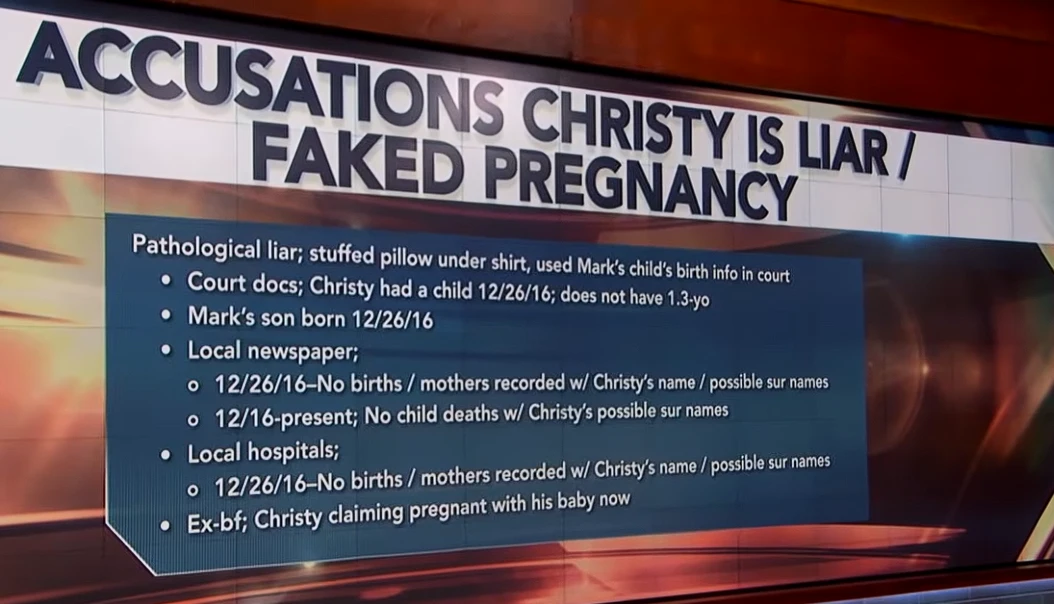
Dr. Phil begins by saying he wants to “finish this point” because it is “instructive.” He explains that a representation had been made to the court that “there was a son born on 12/26/16.” That detail matters because court-related statements are not casual comments. They can influence decisions, records, and how others understand a family situation.
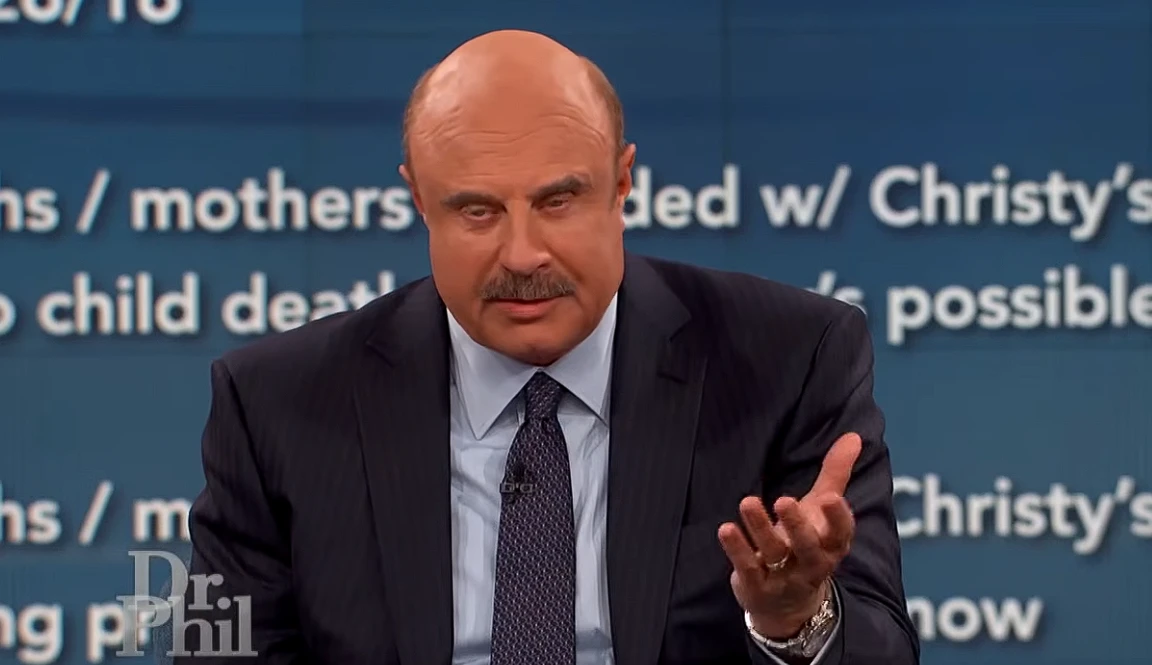
Dr. Phil then explains that his team checked local sources to see whether they could confirm the claimed birth. According to him, they checked a local newspaper, and there was no matching birth announcement. He also says they checked “eight local hospitals” and found no matching record involving a stillborn birth under Kristie’s name.
Kristie immediately interrupts the framing. She says, “I did not have a baby. I had a miscarriage.”
This correction changes the discussion. Dr. Phil is questioning a reported birth. Kristie says the event was a miscarriage, not a live birth or stillborn birth.
Her response is important because it shows how one word can dramatically change the evidence needed. A birth may appear in public or hospital records. A miscarriage may not appear in a newspaper and may be documented differently depending on medical circumstances.
Kristie emphasizes that difference, saying, “There’s a difference between a miscarriage and a stillborn.” She then asks, “When does that get published in the newspaper?” Her point is that Dr. Phil may be checking the wrong type of record if the event she describes was not a birth.
Dr. Phil Looks for Verification, Not Just Emotion
The first major lesson from the segment is that Dr. Phil is focused on verification. He does not simply ask whether Kristie is emotional or convincing. He asks whether her claims match records and timelines.
This is important because serious personal claims often carry strong emotions. A person may feel defensive. Another person may feel suspicious. But emotional intensity does not prove or disprove the claim. Evidence becomes necessary when the story affects court matters, former partners, family members, or public credibility.
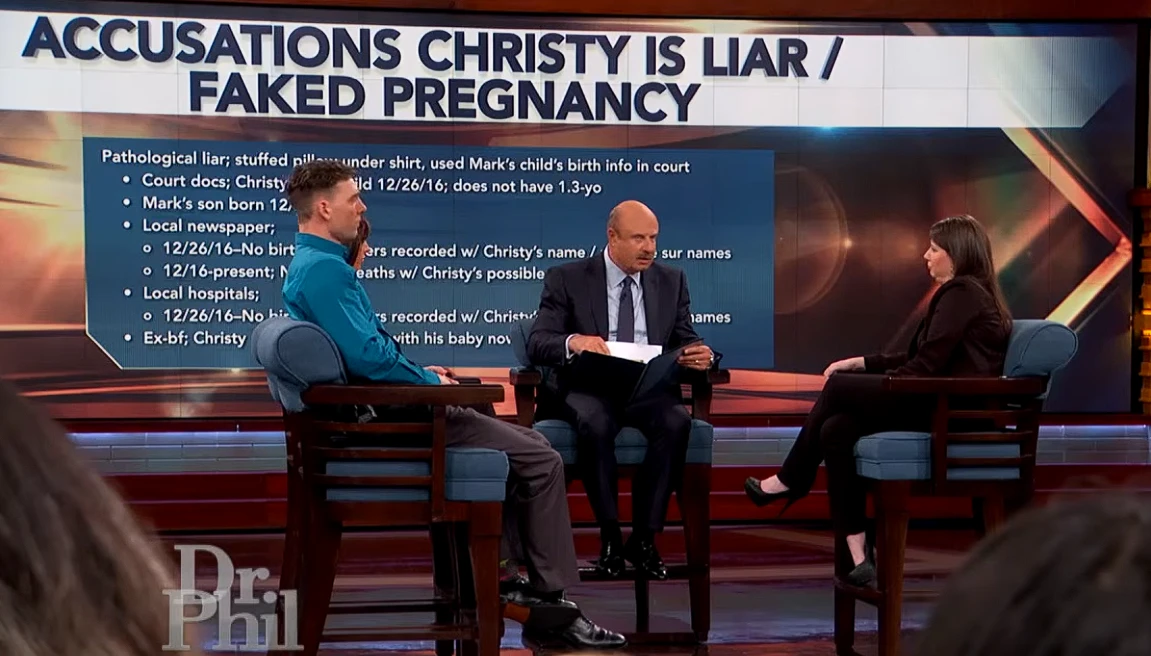
Kristie’s explanation about miscarriage is a valid distinction to raise. However, the challenge is that the original court representation Dr. Phil describes involved “a son born.” If the actual claim is now a miscarriage, then the question becomes: why was the earlier representation described differently?
That is where credibility becomes central. The issue is not only whether a miscarriage could happen. The issue is whether the descriptions of the event have remained consistent over time.
Dr. Phil’s method is clear: take each claim, compare it with available documentation, and ask whether the timeline still makes sense.
Another Pregnancy Question Expands the Dispute
Dr. Phil then shifts from the court-related claim to another relationship. He asks Kristie directly, “Did you also claim you were pregnant with your ex-boyfriend’s?”
Kristie answers, “No.” She adds, “I’m currently not claiming I’m pregnant at all.”
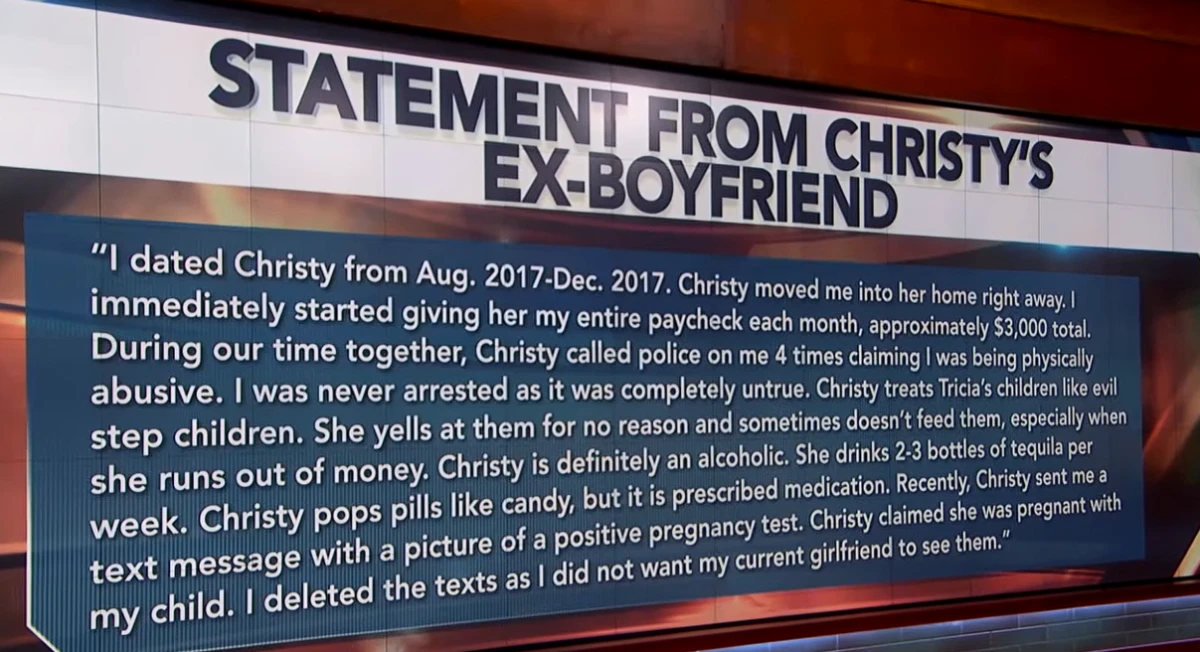
That denial is direct. But Dr. Phil immediately introduces a statement from the ex-boyfriend. According to the statement, the man says he dated Kristie from August to December and that she moved him into her home “right away.” He also claims he gave her his entire paycheck each month, around “$2,000 total” during their time together.

The statement includes several other claims about the relationship, but the key part for this segment is the pregnancy allegation. The ex-boyfriend says, “Recently she sent me a text with a picture of a positive pregnancy test.” He says Kristie claimed she was pregnant with his child.
Kristie reacts with skepticism because the ex-boyfriend says he deleted the messages. She responds, “Oh, deleted the text. How convenient for him.”
Dr. Phil quickly answers, “Well, we can recover them.”
This exchange is important because it again shifts the conversation toward evidence. If the texts exist or can be recovered, they could help determine whether the ex-boyfriend’s statement is accurate. If they cannot be recovered, the claim remains harder to verify.
The deeper issue is that Kristie is denying another pregnancy-related claim, while a former partner is saying something different. Once again, the conversation becomes a test of consistency.
Deleted Messages and the Problem of Convenient Gaps
Kristie’s reaction to the deleted text is understandable from a defensive standpoint. When someone claims to have proof but says they deleted it, the accused person may naturally question the timing.
Her line, “How convenient for him,” suggests she believes the ex-boyfriend’s missing evidence weakens his credibility.
At the same time, Dr. Phil’s response matters because digital messages are not always gone forever simply because a user deletes them from a device. His statement, “We can recover them,” signals that he does not want the argument to remain in the area of opinion.
This part of the segment shows why documentation is crucial in modern disputes. Texts, photos, records, timestamps, and medical documentation can turn a vague argument into a clearer timeline.
Without those materials, both sides can continue making claims. With them, the conversation becomes more factual.
Dr. Phil’s approach is not to accept the ex-boyfriend’s statement automatically. Instead, he makes clear that if evidence exists, it should be examined.
Medical History Becomes a Major Point
The discussion becomes more complicated when Dr. Phil brings up a statement from Kristie’s ex-husband.
According to Dr. Phil, the ex-husband said, “I knew Kristie wasn’t pregnant because she got her tubes tied 15 years ago.”
Kristie immediately responds, “I did have my tubes tied. One of them.”
This correction matters because she is trying to narrow the claim. She is not denying that she had a procedure. She is saying the ex-husband’s version is incomplete.
Dr. Phil then asks how she could have had a miscarriage after the procedure. Kristie explains that she had “one” tube tied because she was having problems with PCOS, or polycystic ovarian syndrome. She says, “People’s tubes do come untied.” She adds that she did not have them “cut, burned, tied, gutted,” and argues that pregnancy can still happen.

This explanation introduces a medical angle, but the segment does not become a full medical debate. Dr. Phil uses humor to express skepticism, joking about his own unrelated medical history. The audience laughs, but the point remains: Kristie’s explanation is being questioned because it must fit with the rest of the timeline.
Medical exceptions can exist. But when a story already has multiple disputed elements, every additional exception becomes part of the credibility evaluation.
Why One Explanation May Not Be Enough
Kristie offers explanations for several points. She says it was a miscarriage, not a birth. She says there is a difference between miscarriage and stillborn. She says she is not currently claiming pregnancy. She challenges the deleted text. She says only one tube was tied and that medical complications explain why pregnancy could still be possible.
Each explanation may sound possible when viewed alone.
But Dr. Phil is not evaluating them alone. He is looking at the combined pattern.
That is the key to understanding the segment. A single inconsistency may have an innocent explanation. Multiple inconsistencies across court statements, medical details, former relationships, and missing digital evidence create a larger credibility problem.
This does not automatically prove intentional deception. But it does mean the person making the claims must provide clearer documentation if they want others to accept the story.
In other words, the more complicated the explanation becomes, the more important evidence becomes.
Dr. Phil’s Interview Style: Pressure Through Specifics
Dr. Phil’s approach in this segment is built around specifics. He does not simply ask, “Did you lie?” Instead, he asks about dates, records, hospitals, former partners, medical procedures, text messages, and terminology.
This technique matters because broad accusations often lead to broad denials. Specific questions force the conversation into measurable details.
When he mentions “12/26/16,” Kristie must respond to a date. When he mentions “eight local hospitals,” she must respond to the type of record being searched. When he reads the ex-boyfriend’s statement, she must respond to the pregnancy test photo claim. When he brings up the tubal ligation, she must explain the medical possibility.
This is why the interview feels tense. Dr. Phil is not allowing the conversation to remain vague.
For viewers, this creates a clear lesson: credibility is built through details that remain consistent under questioning.
The Difference Between Denial and Clarification
Kristie’s responses include both denial and clarification.
She denies having a baby. She denies currently claiming pregnancy. She challenges the ex-boyfriend’s statement. But she also clarifies that she had a miscarriage, that one tube was tied, and that her medical condition involved PCOS.
This difference matters because not every disagreement is the same. Sometimes people deny the entire claim. Other times, they agree with part of the claim but argue that the interpretation is wrong.
For example, if there was no birth, but there was a miscarriage, then the dispute may partly involve terminology. If the ex-boyfriend claims she sent a pregnancy test photo and she denies it, then that is a factual dispute requiring evidence.
Dr. Phil’s questioning makes viewers separate these categories. Some issues require medical documentation. Some require digital recovery. Some require court records. Some require witness credibility.
That layered structure is what makes the segment more than a simple confrontation.
Why Pregnancy Claims Carry Serious Consequences
Pregnancy claims are emotionally powerful because they affect relationships, future plans, finances, family decisions, and legal responsibilities.
If someone believes they are becoming a parent, their life can change immediately. They may move, provide money, make commitments, or alter their relationship choices. If a court receives information about a child, that information can also influence legal discussions.
That is why Dr. Phil treats the matter seriously. He is not simply asking about gossip. He is asking about claims that may have influenced real decisions.
The ex-boyfriend’s statement also includes financial claims, saying he gave Kristie his paycheck. Whether or not every detail is accurate, it shows that pregnancy-related stories do not exist in isolation. They can connect to money, housing, emotional commitment, and conflict with other partners.

This is why documentation is essential. Serious claims require more than verbal insistence.
Situation Judgment
Based on the segment, Kristie strongly denies that she fabricated a pregnancy and repeatedly tries to clarify what she says actually happened. She insists, “I did not have a baby. I had a miscarriage,” and argues that a miscarriage would not appear in the types of public records Dr. Phil mentions.
At the same time, Dr. Phil presents several points that raise credibility questions: a court representation involving a son born on a specific date, lack of matching records, an ex-boyfriend’s claim about a positive pregnancy test photo, and an ex-husband’s statement about her medical history.
The strongest concern is not one single disputed detail. It is the number of disputed details and whether they can be tied together into one consistent timeline.
Kristie’s explanations may answer certain points, but they also require supporting evidence. In a situation involving former partners, court-related statements, and medical claims, clear documentation is the only way to move beyond accusation and denial.
Final Lesson
This Dr. Phil segment shows why consistency matters when personal claims have serious consequences.
A story involving pregnancy, miscarriage, medical history, court representations, former partners, and digital messages cannot be resolved through confidence alone. It requires records, timelines, and evidence that can be checked.
Kristie’s strongest defense is that Dr. Phil’s team may have been searching for the wrong type of record if the event was a miscarriage rather than a birth. Dr. Phil’s strongest concern is that earlier statements, later denials, and outside witness claims do not appear to line up neatly.
The lesson for viewers is not to rush to judgment based only on emotion. The better lesson is to ask clear questions: What was originally claimed? What changed? What can be documented? Who has evidence? Which parts of the story remain consistent?
In the end, credibility is not built by having the loudest denial or the most dramatic accusation. It is built by presenting a timeline that holds together when evidence, records, and witness statements are placed side by side.